
Unplayable Ball Relief in Jeju Golf: Check Rule 19's Three Options and Their Penalties Before You Play
An illustration generated to help explain the text — not a photograph.
On a Jeju course, there are moments when your ball comes to rest at the base of a tree or deep in a thicket where it simply cannot be played. This is where unplayable ball relief comes in. The options available and the penalty strokes they cost are set out in R&A Rule 19. Without assuming the Local Rules of any particular Jeju golf course, here are the options Rule 19 provides, in order.
Who decides a ball is unplayable, and where
R&A Rule 19 allows the player to choose a relief option for getting out of a difficult situation anywhere on the course except in a penalty area. Under Rule 19.1, the player is the only person who may decide to treat their ball as unplayable by taking penalty relief under Rule 19.2 or 19.3. A caddie or a fellow player does not make that judgment for them; the person who played the ball decides.
This Rule cannot be used when the ball is in a penalty area. If a ball cannot be played from a penalty area, the player's only relief option is penalty relief under Rule 17. If your ball has come to rest inside a penalty area, think of Rule 17 first, not Rule 19.
The three relief options in the general area and on the putting green
The player may take unplayable ball relief for one penalty stroke under one of the options in Rule 19.2a, b or c. All three cost the same one penalty stroke; what differs is where the next stroke is played from. However, to take back-on-the-line relief or lateral relief the player must know the spot of the original ball. If you do not know where the ball is, the option left is stroke-and-distance relief.
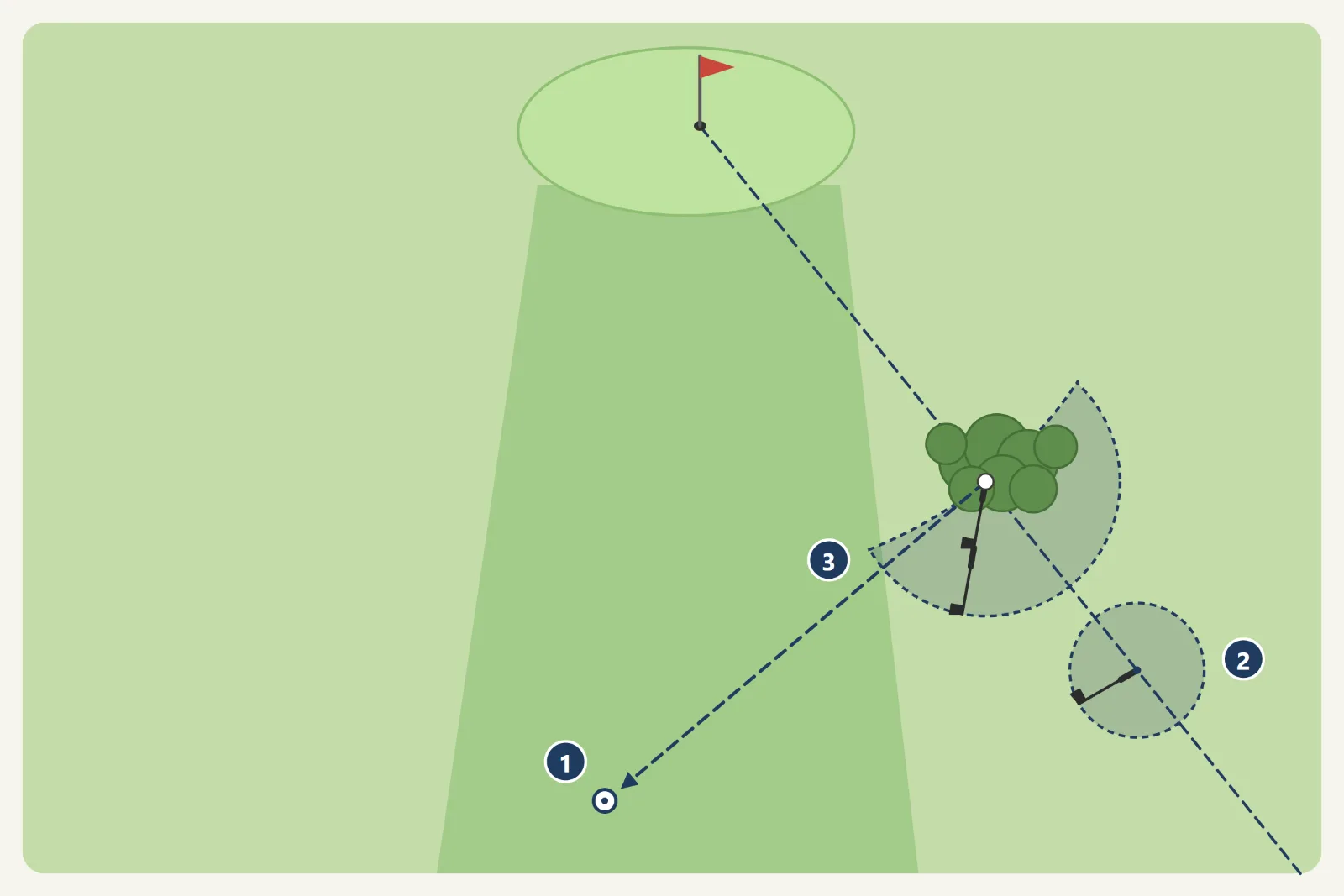
Stroke-and-distance relief (Rule 19.2a) lets the player play either the original ball or another ball from where the previous stroke was made. You give up distance, but it is the surest way to change your lie, which is why it is often the option chosen when a tee shot has gone deep into the trees.
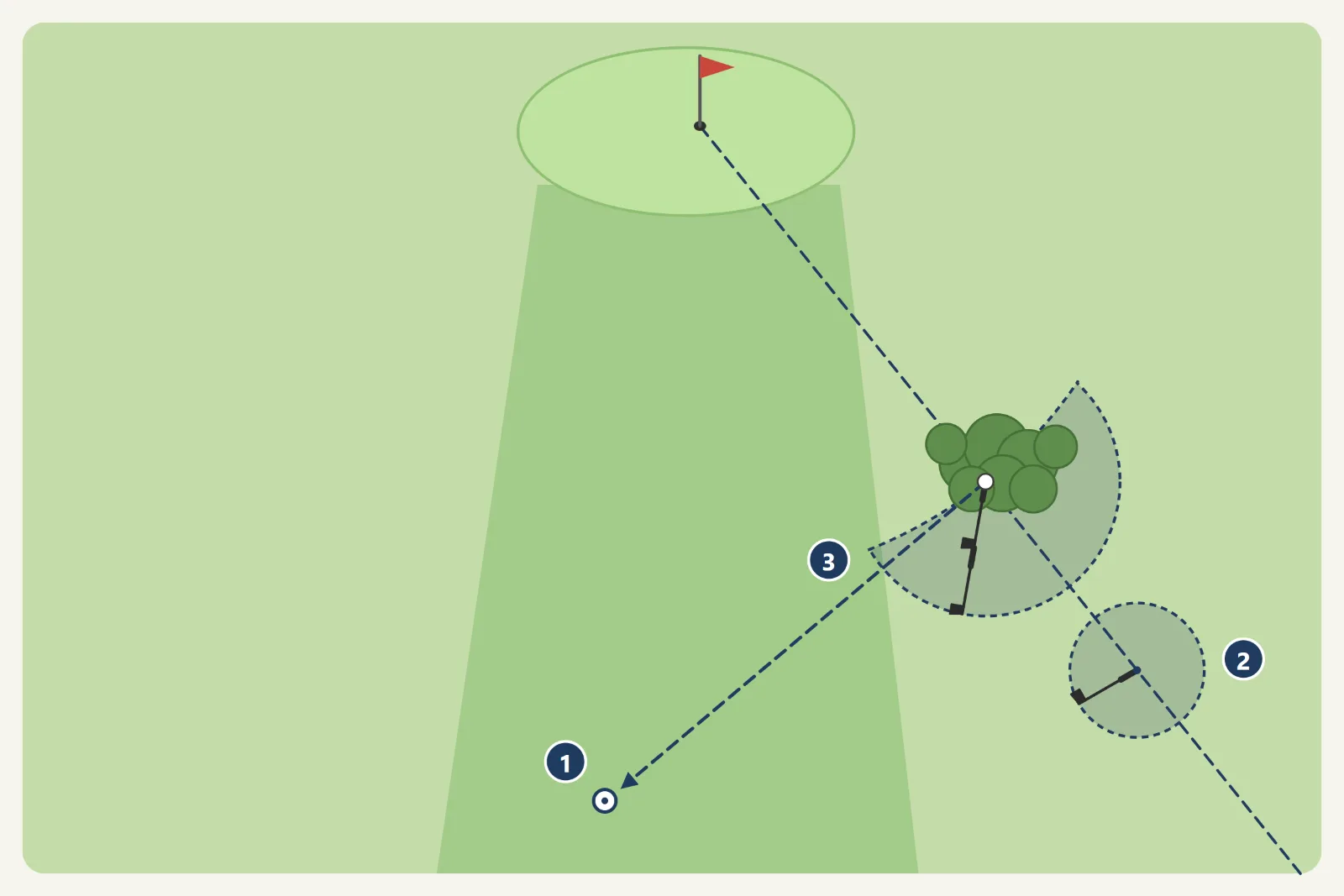
Back-on-the-line relief (Rule 19.2b) means dropping a ball on a reference line extending back from the spot of the original ball, so that the spot is kept between the hole and where the ball is dropped. The relief area is decided as the area within one club-length in any direction from the point where the ball first touched the ground when dropped on that line. There is no limit on how far back on the line the ball may be dropped. The relief area must not be nearer the hole than the spot of the original ball, however, and it must be in the same area of the course as the point where the ball first touched the ground.
For lateral relief (Rule 19.2c), the reference point is the spot of the original ball, and the size of the relief area is within two club-lengths of that reference point. But if the ball lies above the ground (for example, in a tree), the reference point is the point on the ground directly below the ball. This relief area, too, must not be nearer the hole than the reference point, and it may be in any area of the course. But if there are two or more areas of the course within two club-lengths of the reference point, the ball must come to rest in the relief area in the same area of the course that it first touched when dropped.
In a bunker there is one more option
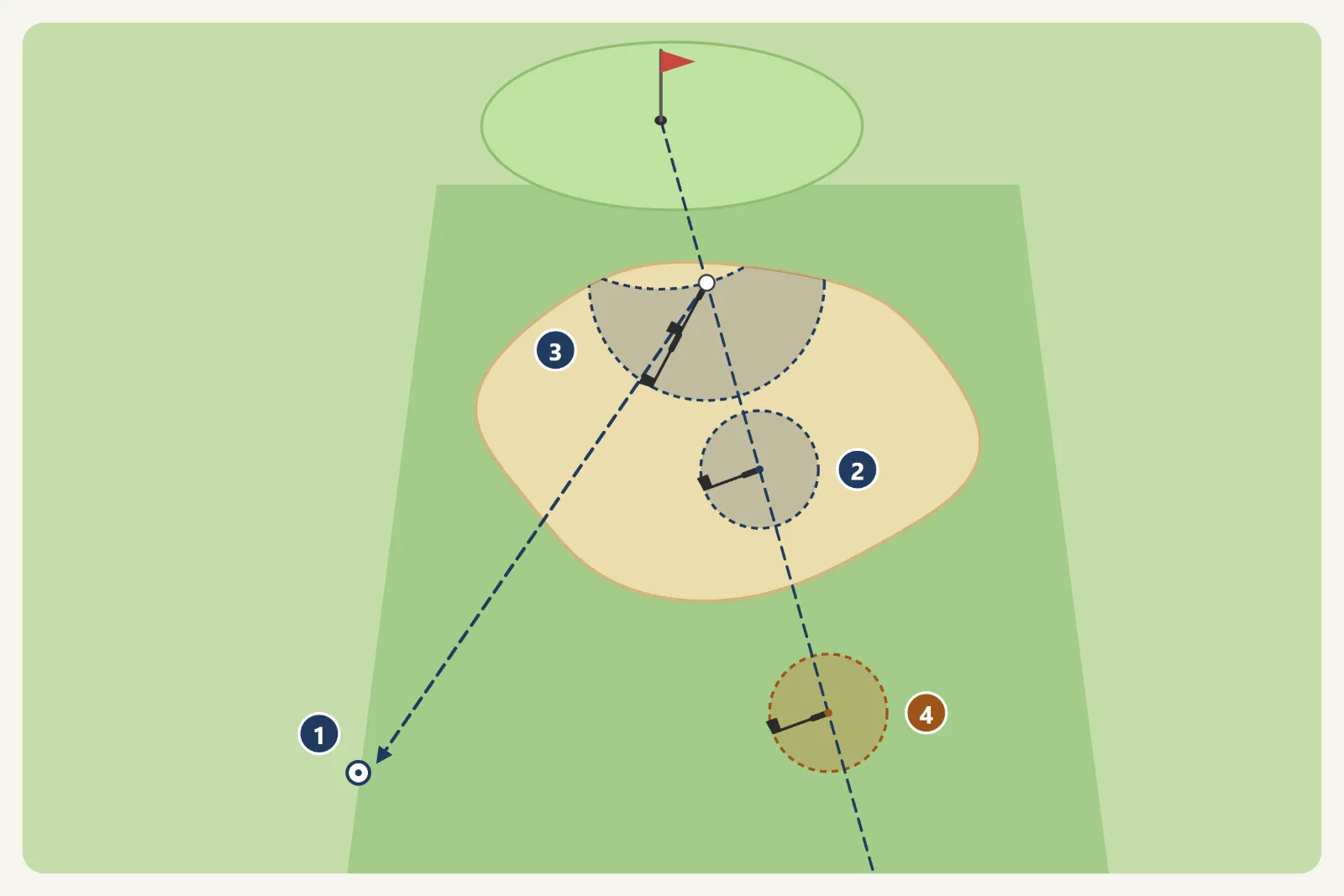
When the ball is in a bunker, the player may still take unplayable ball relief for one penalty stroke under one of the options in Rule 19.2 (Rule 19.3a). If the player takes back-on-the-line relief or lateral relief, however, the ball must be dropped in and come to rest in that bunker.
On top of this there is an extra relief option. Under Rule 19.3b, the player may take back-on-the-line relief outside the bunker for a total of two penalty strokes. When the ball is plugged deep in wet sand and would be hard to play wherever it was dropped inside the bunker, this means there is an option to pay two penalty strokes and get out of the bunker. Which is better depends on the lie and the distance left, so weigh the number of penalty strokes and the drop location together.
Get on the same page with your group before you tee off
Before the round starts, make a short list of what to check.
- Is the spot where the ball came to rest in a penalty area or not? If it is, Rule 17 applies, not Rule 19
- Do you know the spot of the original ball? If not, only stroke-and-distance relief remains
- One club-length for back-on-the-line relief, two club-lengths for lateral relief, and neither may be nearer the hole
- Have you talked over in advance whether to use the option of paying two penalty strokes to get out of a bunker?
During the round, tell your fellow players which option you have chosen, and confirm the reference point and the relief area together before you drop, so that the standards do not diverge later on. This article is based on R&A Rule 19; it does not assume the Local Rules or course conditions of any particular Jeju golf course. Courses may have additional Local Rules, so also check the information for the round you are playing in.
Who this is for
- Golfers about to play a Jeju course for the first time who want to go over the Rules again
- Travelers who want to agree in advance on how unplayable balls are handled in club rounds
Sources
- 골프 규칙 19 언플레이어블볼 · R&A
Last updated